Why Choosing the Right Awning Matters
Florida homeowners know that outdoor living is a central part of their lifestyle. Sun, humidity, and occasional rain make shade solutions essential for comfort, energy efficiency, and protection of outdoor spaces. Awnings are a popular choice, but selecting between a retractable awning and a fixed awning can be challenging.
The decision affects usability, durability, aesthetics, and long-term maintenance. Understanding the benefits, limitations, and applications of each type helps homeowners make an informed choice tailored to South Florida conditions.
What Is a Retractable Awning?
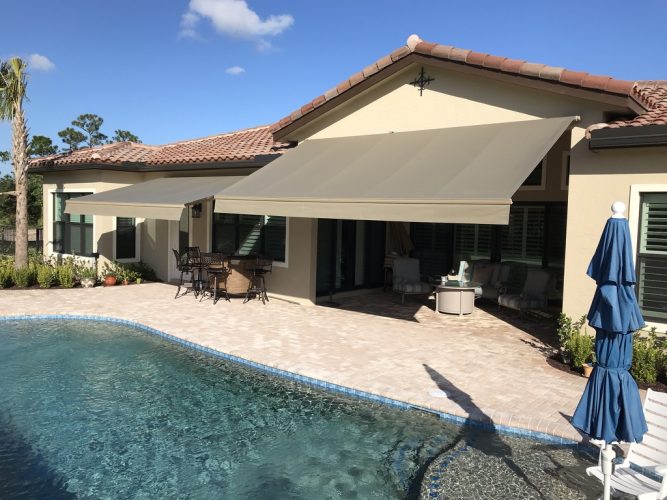
Retractable awnings are adjustable shade systems that can extend or retract as needed. They are available in manual or motorized options and are designed to provide flexible sun and rain protection.
Key Features of Retractable Awnings
-
Adjustable Shade: Extend the awning to block sun or retract it when full sunlight is desired.
-
Motorized Operation: Modern systems operate with remotes, wall switches, or smartphone apps. Many include rain and wind sensors for automatic protection.
-
Protection When Retracted: Retractable awnings can be stored in a protective cassette to prevent weather damage.
-
Versatile Placement: Ideal for patios, lanais, decks, and pool areas.
Benefits
-
Maximum control over shade and sunlight
-
Less exposure to damage when retracted
-
Enhances outdoor comfort and energy efficiency
-
Customizable fabrics and frame colors
Considerations
-
Requires mechanical components that may need maintenance
-
Initial cost may be higher than fixed systems
What Is a Fixed Awning?
Fixed awnings are permanent shade structures attached to the home. They do not move or retract and are designed for durability and low maintenance.
Key Features of Fixed Awnings
-
Permanent Coverage: Provides consistent protection from sun and rain.
-
Durable Materials: Constructed with metal frames, waterproof fabrics, or composite panels.
-
Simple Design: No moving parts, reducing maintenance needs.
-
Versatile Styles: Available in classic, contemporary, and custom designs.
Benefits
-
Long-lasting and low maintenance
-
Consistent protection and shade
-
Structural durability against wind and storms
-
Great for small spaces or areas with permanent coverage needs
Considerations
-
Cannot adjust shade or retract for full sunlight
-
May limit views or sunlight if permanent placement is extensive
Comparing Retractable vs Fixed Awnings
| Feature | Retractable Awnings | Fixed Awnings |
|---|---|---|
| Shade Control | Adjustable, flexible | Permanent, static |
| Protection from Weather | Retractable to avoid damage | Always exposed |
| Maintenance | Moderate (mechanical parts) | Low (no moving parts) |
| Cost | Higher upfront | Lower to moderate |
| Aesthetic Flexibility | Multiple styles, retractable | Permanent design, fewer changes |
| Installation | Professional recommended | Professional or DIY possible |
Factors to Consider for Florida Homes
Climate and Sun Exposure
Florida receives intense sunlight year-round. Retractable awnings allow homeowners to control the amount of shade and sunlight in their outdoor spaces, reducing heat gain indoors and preventing furniture fading. Fixed awnings provide constant shade, which may be preferable for certain patios or windows.
Hurricane and Storm Preparedness
Retractable awnings can be retracted during storms to prevent damage. Fixed awnings must be constructed with durable, wind-resistant materials to withstand hurricanes and tropical storms. Hurricane-rated fabrics and reinforced frames are recommended for permanent structures.
Outdoor Living Goals
Consider how the space is used. Retractable awnings are ideal for flexible outdoor living, entertaining, and dining areas. Fixed awnings are suitable for permanent installations over patios, windows, or walkways.
Maintenance and Longevity
Retractable awnings require occasional maintenance for motors, moving parts, and fabric tension. Fixed awnings are typically low-maintenance but may require occasional cleaning and inspection for corrosion or fabric wear.
Aesthetic Considerations
Retractable awnings offer modern, sleek designs and can be hidden when not in use. Fixed awnings provide classic charm and can complement architectural styles. Both options can use premium fabrics such as Sunbrella, Tempotest, or Sattler for color retention and durability.
Materials and Fabric Options
Fabric Choices
-
Sunbrella: Fade-resistant, UV-protective, and water-repellent.
-
Tempotest: Elegant European designs with strong sun protection.
-
Sattler: Durable, with waterproof options for harsh weather.
-
Firesist: Fire-retardant, ideal near grills or outdoor kitchens.
Frame Materials
-
Aluminum: Lightweight, corrosion-resistant, perfect for coastal climates.
-
Steel: Strong and durable, often powder-coated for weather resistance.
-
Composite Materials: Low-maintenance, stylish, and resistant to corrosion.
Installation Considerations
Professional installation is recommended for both retractable and fixed awnings to ensure durability, safety, and proper alignment. Installation considerations include:
-
Measuring Spaces: Accurate measurements for coverage and fit
-
Structural Support: Ensuring proper wall or roof attachment
-
Fabric Tension: For retractable awnings, proper fabric tension prevents sagging and damage
-
Compliance: Adhering to local building codes for hurricane and wind loads
Enhancing Outdoor Living
Patio and Deck Areas
Retractable awnings allow homeowners to enjoy shaded areas when needed and retract for sunbathing or stargazing. Fixed awnings provide consistent shade for lounging and dining areas.
Poolside Protection
Awnings protect poolside furniture from sun damage and provide shaded relaxation areas. Retractable systems are ideal for adjusting coverage depending on sun position.
Outdoor Kitchens and Dining
Both types of awnings enhance outdoor dining areas. Retractable options give flexibility for entertaining, while fixed awnings provide consistent coverage for meals and cooking areas.
Energy Efficiency
Awnings reduce heat entering through windows and doors, lowering air conditioning usage. Retractable awnings offer seasonal flexibility, while fixed awnings provide year-round shading.
Maintenance Tips
-
Clean fabrics regularly with mild soap and water
-
Inspect frames and hardware for corrosion or damage
-
Lubricate mechanical parts on retractable systems
-
Check tension and alignment for proper operation
Proper maintenance extends the lifespan of your awning and ensures consistent performance.
Frequently Asked Questions
Can retractable awnings withstand hurricanes?
Yes, when properly installed and retracted during storms. Choose hurricane-rated fabrics and reinforced frames for added protection.
Which is better for small patios?
Fixed awnings are often simpler for small spaces, but retractable systems offer flexibility if you want adjustable shade.
Do retractable awnings require electricity?
Motorized retractable awnings do, but manual options are available that use a hand crank.
Can fixed awnings be customized?
Yes, fixed awnings can be customized with frame materials, colors, and fabric types to match your home’s style.
Making the Right Choice
Choosing between a retractable and fixed awning depends on your outdoor living goals, climate considerations, maintenance preferences, and aesthetic vision. Retractable awnings offer flexibility and protection during storms, while fixed awnings provide long-lasting, low-maintenance shade.
South Florida homeowners benefit from professional guidance to ensure the awning fits their lifestyle, protects their property, and complements their home.
Transform your outdoor space with Awning Stars, contact us today for your free estimate.